guides · retailers
The largest US retailers and how to track their prices
dipd team6 min read
American retail is unimaginably big. According to Capital One Shopping's research on the largest US retailers (updated February 2026), Walmart alone posted $675.6 billion in retail revenue in 2024, Amazon added $391.4 billion, and even the tenth name on the list (Albertsons) cleared $79 billion. Business is good: 68 of the top 100 US retailers grew their sales in 2024.
At that scale, pricing isn't a person with a label gun. It's an industrial process: algorithms, weekly promotions, Rollbacks, Deal Days, clearance cycles. Every bit of it is designed around the retailer's margins, not around the question you actually have: is now a good time to buy this?
That question has a boring, reliable answer: price history. We track products at several of these retailers ourselves, every day, in dipd. Here's the ranking, and what our own dashboard says about how these stores behave.
The top 10, by the numbers
Capital One Shopping's ranking of US retailers by 2024 retail revenue:
| # | Retailer | 2024 retail revenue |
|---|---|---|
| 1 | Walmart | $675.6B |
| 2 | Amazon | $391.4B |
| 3 | Costco | $244.9B |
| 4 | Home Depot | $157.6B |
| 5 | Kroger | $150.8B |
| 6 | CVS | $125.0B |
| 7 | Walgreens | $124.0B |
| 8 | Target | $106.7B |
| 9 | Lowe's | $81.5B |
| 10 | Albertsons | $79.6B |
One more number worth keeping in mind: the same research puts Amazon at 37.6% of the US online retail market. More than a third of American online shopping happens under one pricing engine.
Some of them, on our own dashboard
A ranking tells you where people shop. It doesn't tell you what prices do there, so here are real products we track in dipd at the biggest names on the list, with the price history to show for it.
Walmart
Walmart built its reputation on "everyday low prices", and its online store layers Rollbacks, clearance and third-party marketplace sellers on top. The result: a product page that can quietly change from one week to the next, with no announcement and no pattern you can watch by hand.
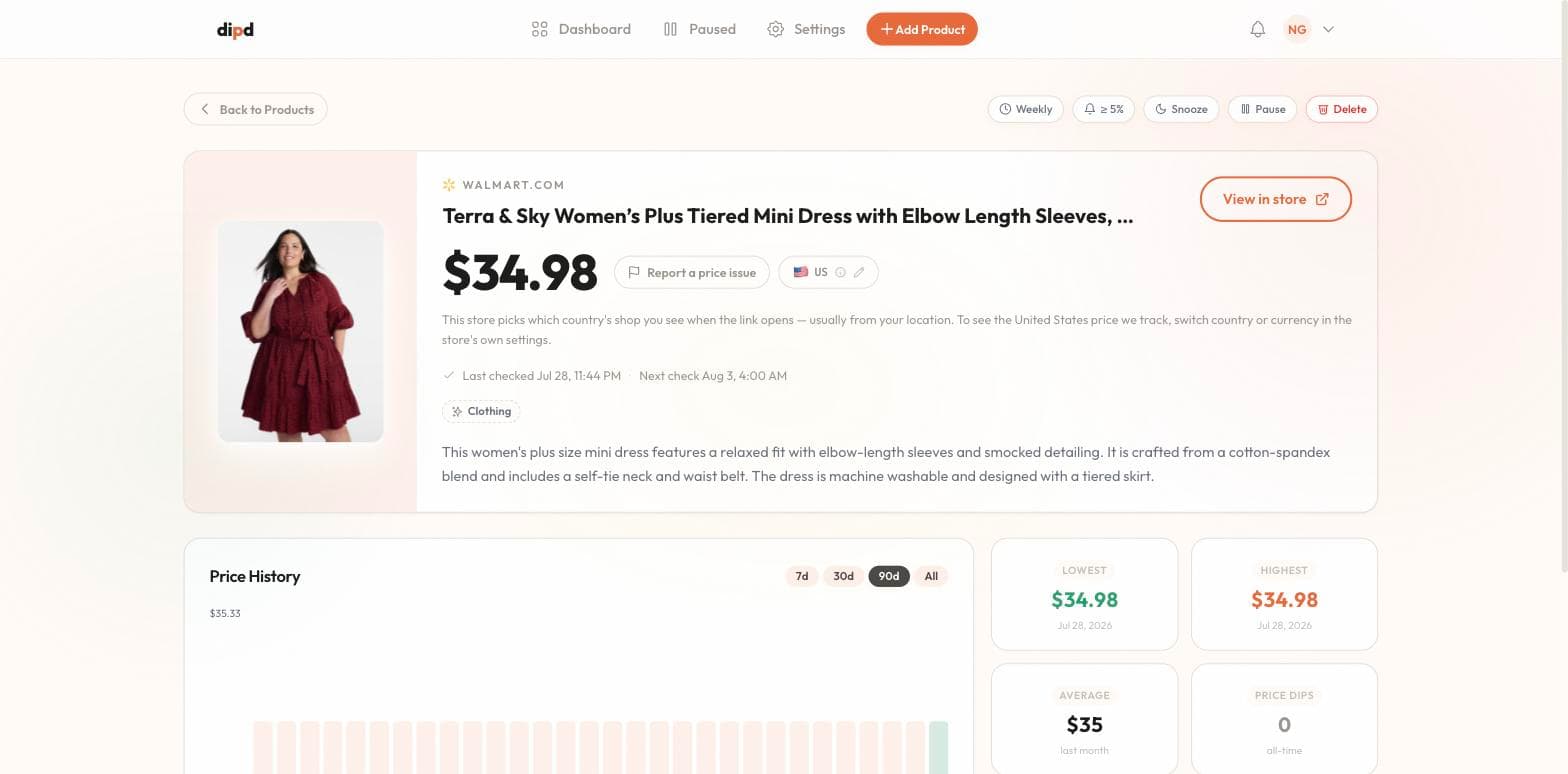
The screenshot is frozen; this card is not. It's the same product, live from our tracker at the moment you're reading:
Our tracked example is a $34.98 dress, and so far its chart is flat. That's not a failed experiment; that's the answer. Tracking Walmart prices isn't about drama. It's about already being there the week the number moves.
Amazon
Amazon repricing is famously fluid: prices shift with demand, competition and time of day, and more than a third of US online retail runs through it. It's also where badges work hardest: the product below wears a -10% sale tag on its store page.
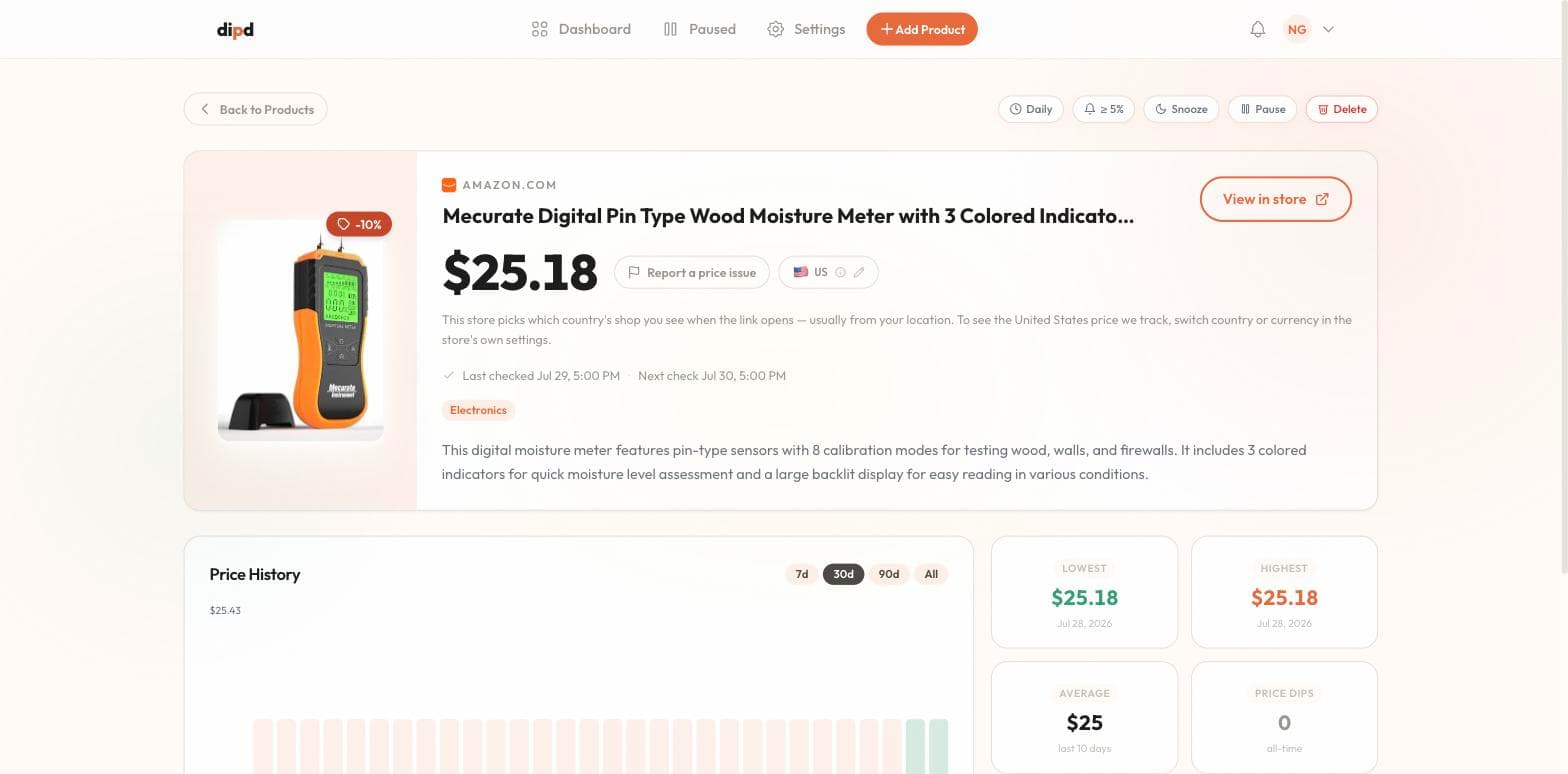
Our chart tells the rest of the story: $25.18 at every single check since we started tracking. The discount may well be real against some list price. But the only way to know what a "deal" is worth is an Amazon price history you collected yourself.
Costco
Costco is the opposite temperament. The warehouse model (membership fees, bulk sizes, thin markups) means prices tend to sit still for long stretches, then drop sharply when something is being cleared out.
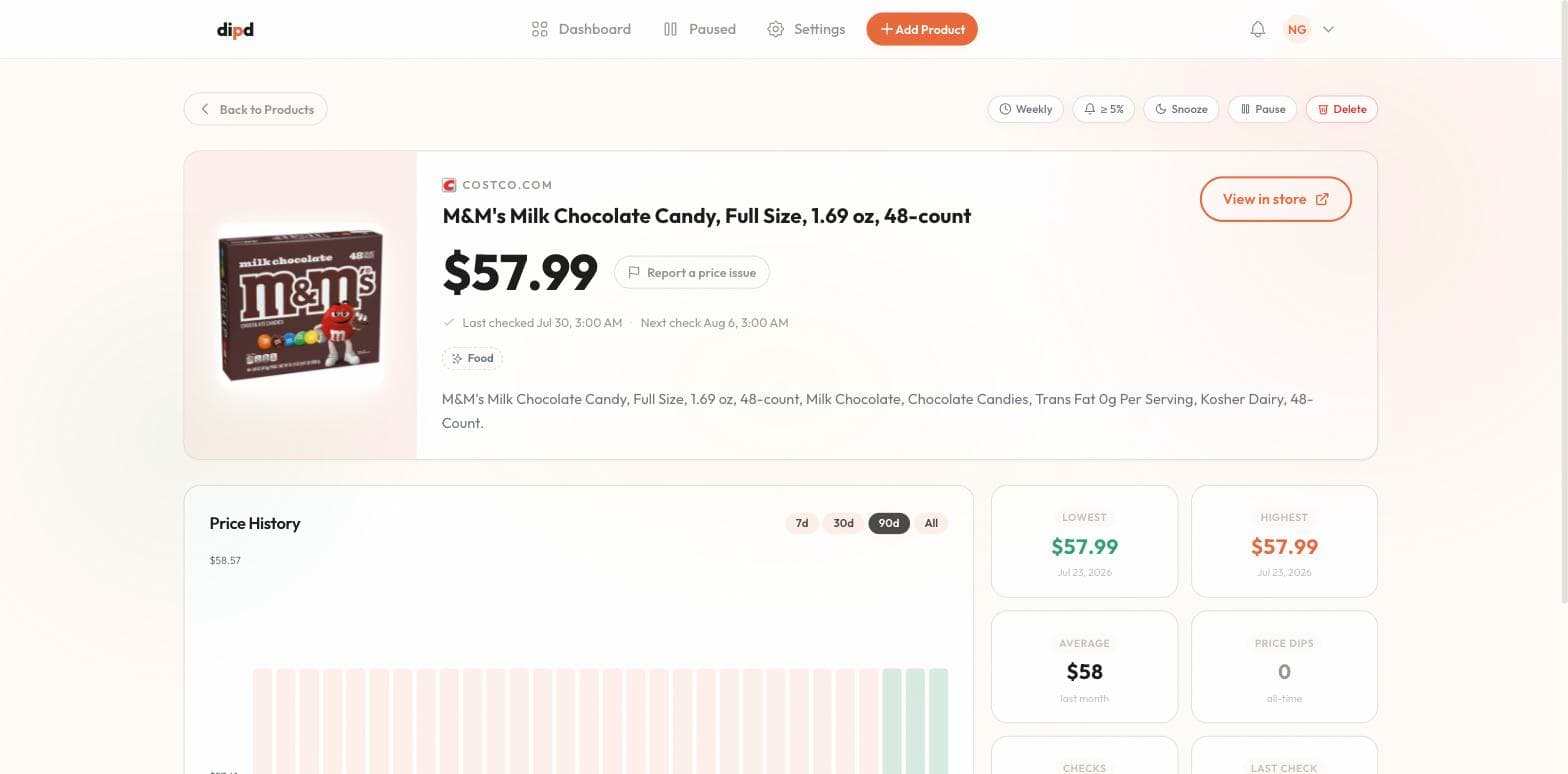
Our example is gloriously mundane: a 48-count box of M&M's at $57.99, steady at every check. A flat Costco chart is information too; it tells you the everyday price is the real price, so when a drop finally shows up, it's worth acting on.
Walgreens
Drugstore retail runs on promotion: weekly ads, loyalty pricing, endless two-for-ones. That makes an independent record of the shelf price unusually useful: it's the only stable thing in the store.
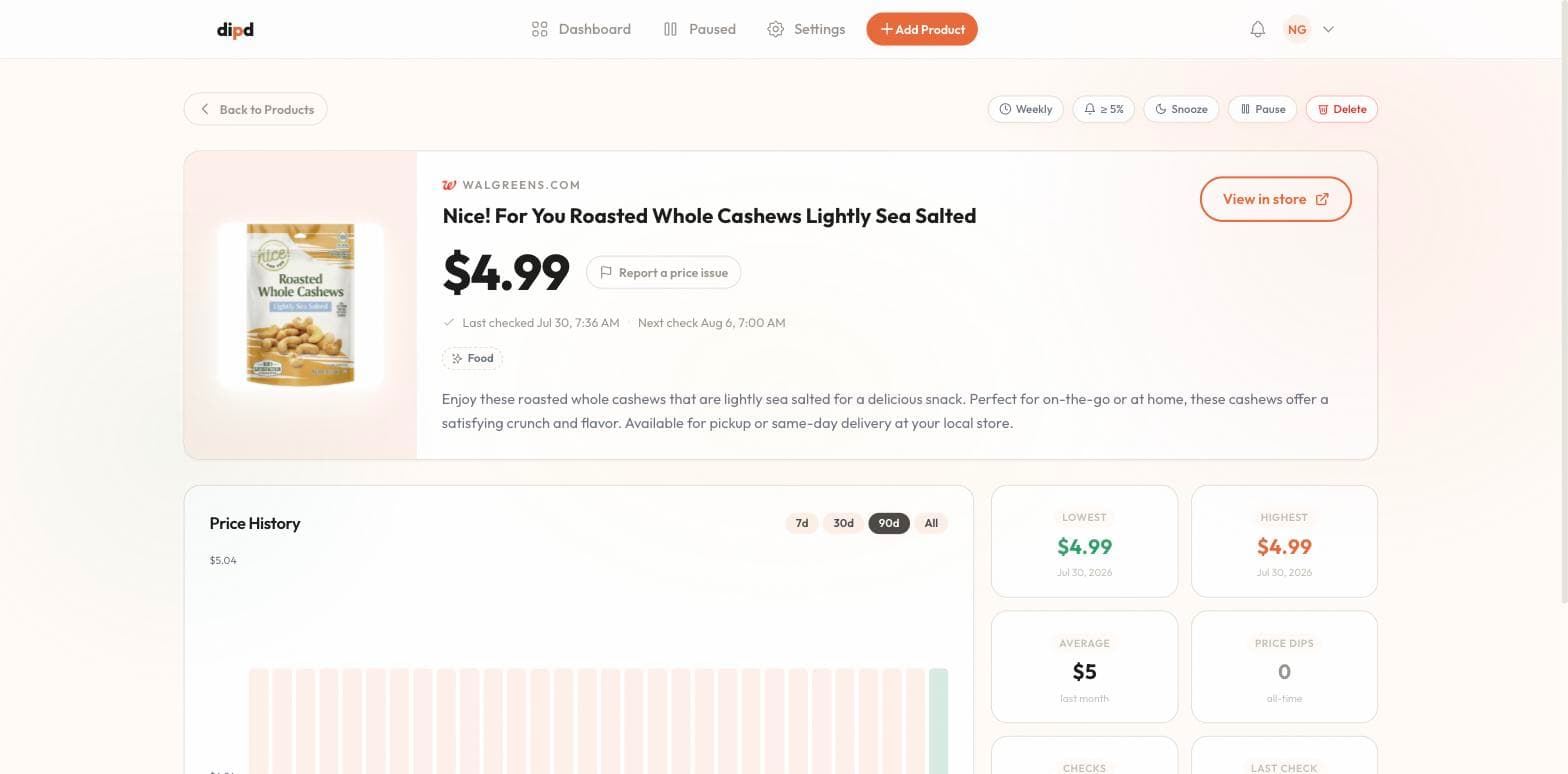
Our example is as everyday as it gets: a $4.99 bag of roasted cashews. Whether it's a television or a snack, the mechanics are identical. dipd checks the page on schedule and writes down what it found.
Target
Target runs one of the busiest promotion calendars in retail: Circle Week, holiday events, category sales that come and go in days. The dress we track there carries a -25% badge on its store page.
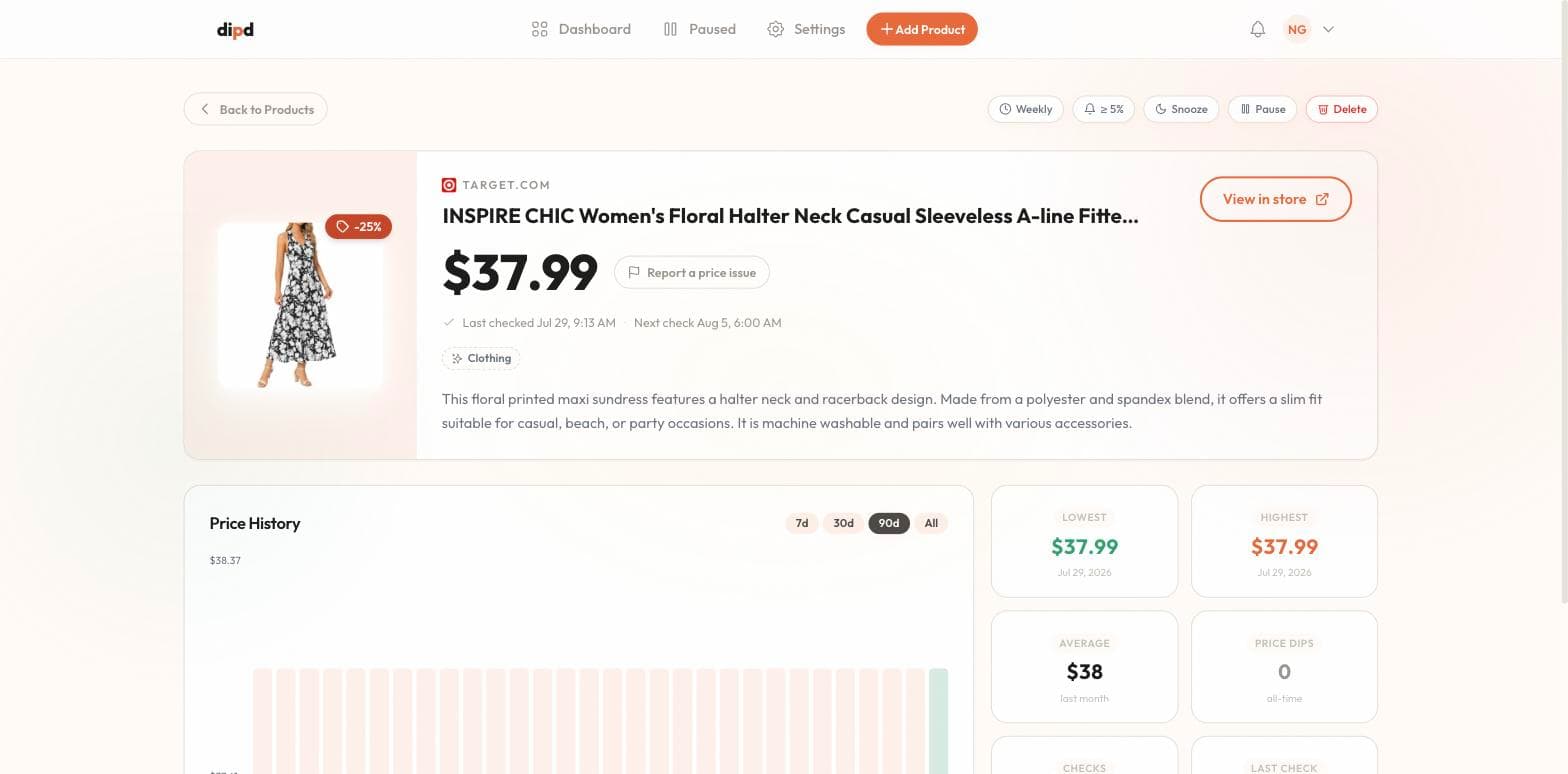
Since we started tracking, it's been $37.99 at every check. Maybe the badge marks a genuine markdown from an earlier price; maybe $37.99 is just what this dress costs. A few more weeks of Target price history will say, automatically.
Bonus: IKEA
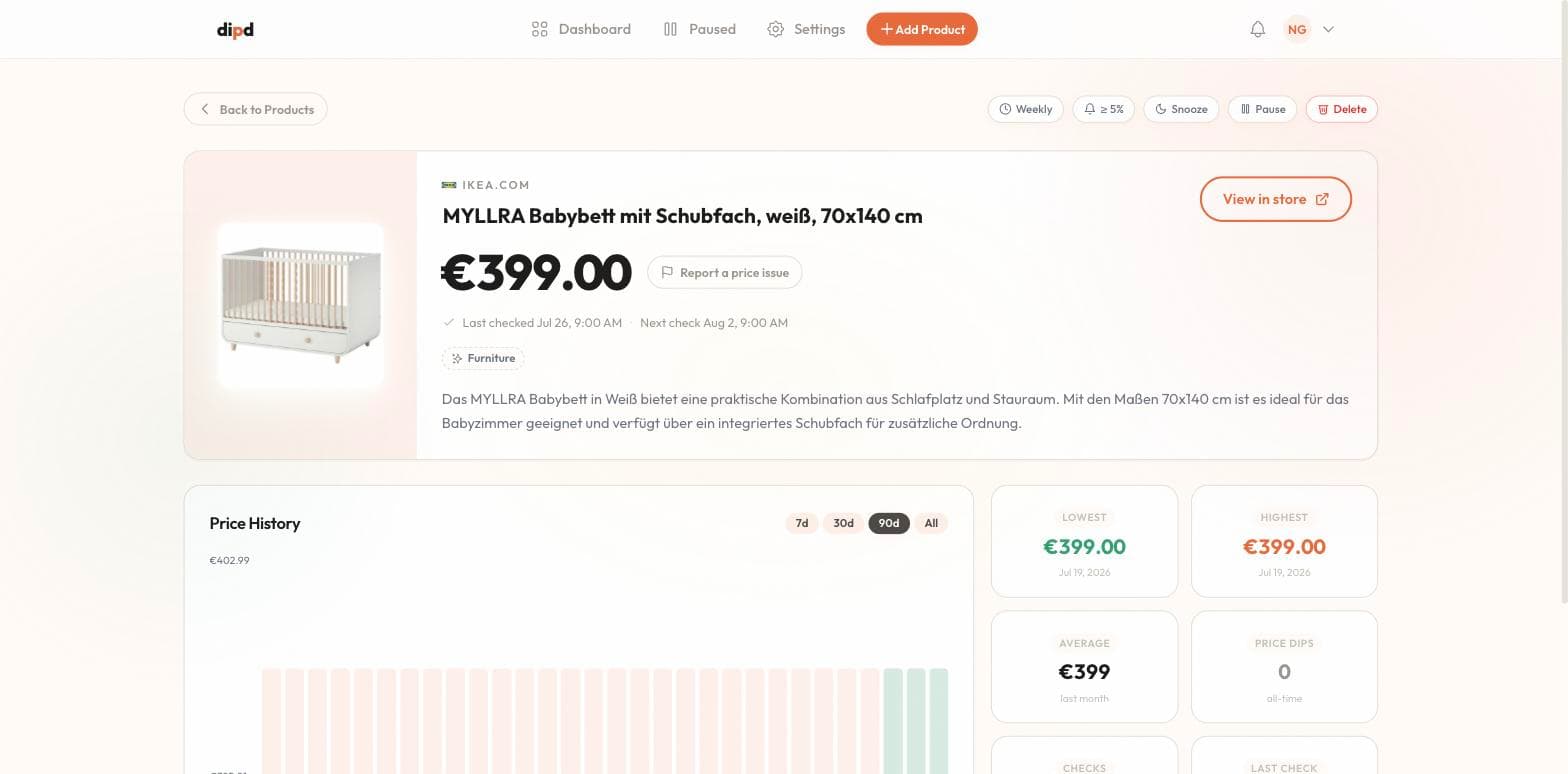
IKEA isn't on the US top-10 list, but it's a good excuse to show what "any store" actually means. This crib comes from IKEA's German shop. Different country, different language, prices in euros. dipd doesn't care; it reads the price like any other.
The rest of the top 10
The same logic applies up and down the list:
- Home Depot and Lowe's are seasonal machines: grills, tools and appliances cycle through spring events, holiday sales and clearance. Prices on big-ticket items move in waves, which is exactly what a history chart is for.
- Kroger and Albertsons are grocery giants. Weekly staples aren't worth tracking, but the durable things they sell (small appliances, cookware, seasonal goods) reprice like everything else.
- CVS, like Walgreens above, runs near-constant storewide promotions on the retail side of the pharmacy. A badge culture, in other words, which makes an independent record of the actual price all the more useful.
You don't need us to support your store, whichever one it is. dipd works on any store: paste a product link, and it starts building the history. The live demo shows exactly how that looks, no account needed.
Watch the price, not the badge
Two of the products above wear sale badges on their store pages. Both have perfectly flat price histories. That's not a scandal. It's just how big retail communicates: a badge tells you what the retailer wants you to feel. A price chart tells you what happened.
dipd is free: track products from any of the stores above (or any other), get checked daily, and get an alert the moment a price actually dips. When a real discount lands at one of America's biggest retailers, you'll know it's real, because you'll have the chart.